
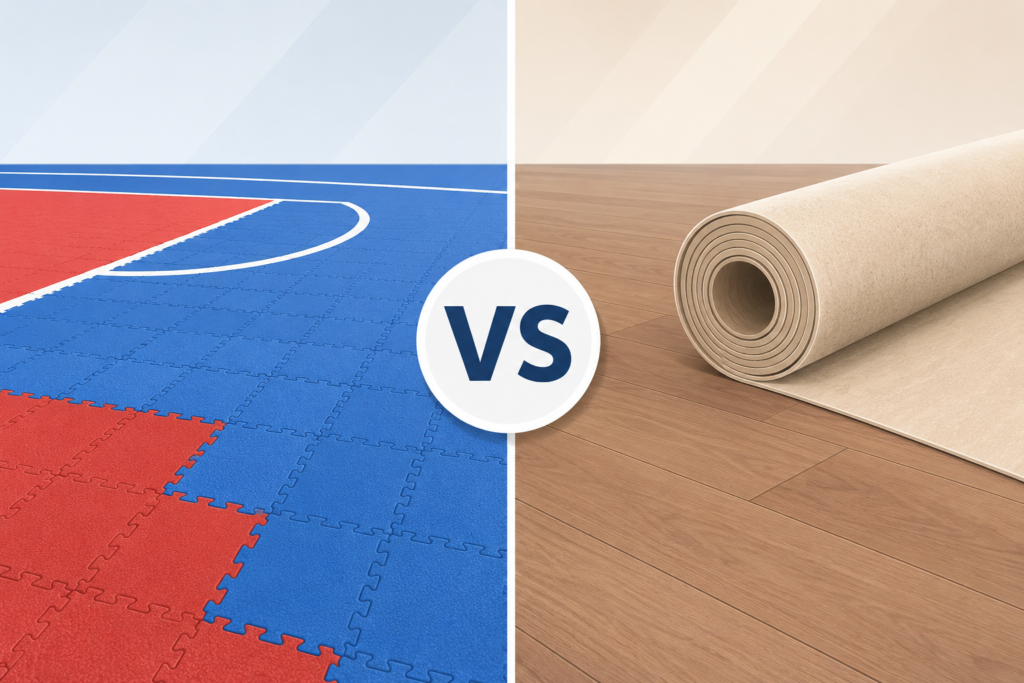
Choosing the right sports flooring isn’t always as straightforward as it sounds. Walk into any sports facility today and you’ll notice different types of surfaces, some smooth and cushioned, others made from interlocking plastic tiles. Two options that often come up in discussions are PP Interlocking Tiles and PVC Sports Flooring. Both are popular, both perform well, but they serve slightly different purposes.
So which one is actually better? The answer depends on how and where the flooring will be used.
Understanding PP Interlocking Tiles
PP (polypropylene) interlocking tiles are commonly used for outdoor sports courts. These tiles are designed to snap together like puzzle pieces, forming a stable and durable playing surface.
One of the biggest advantages of PP interlocking tiles is their ease of installation. You don’t need heavy construction work or complex adhesives. The tiles simply lock into place, making them ideal for basketball courts, futsal grounds, and multi-sport outdoor areas.
They also handle weather conditions quite well. Rainwater can drain through the small gaps in the tiles, which means outdoor courts stay usable even after showers. The surface is tough, resistant to UV rays, and capable of handling heavy foot traffic.
However, while they are durable, they tend to feel slightly harder underfoot compared to cushioned indoor flooring systems.
What Makes PVC Sports Flooring Different
PVC Sports Flooring is typically used for indoor sports facilities like badminton courts, table tennis halls, gymnasiums, and training centers.
Unlike interlocking tiles, PVC flooring usually comes in rolled sheets with multiple layers. These layers are designed to provide cushioning, shock absorption, and better grip. For athletes, this can make a noticeable difference. Movements feel smoother, and the flooring helps reduce strain on joints during quick direction changes.
Another advantage is the consistent playing surface. Since the flooring is installed as continuous sheets, players don’t feel the seams or gaps that can sometimes exist in tile-based systems.
PVC flooring also allows for customized court markings and comes in various colors, giving indoor arenas a more professional appearance.
Durability and Maintenance
Both options are built to last, but they perform differently depending on the environment.
PP interlocking tiles shine in outdoor conditions. They tolerate heat, sunlight, and rain better than many traditional flooring systems. Maintenance is minimal—usually just regular cleaning.
PVC sports flooring, on the other hand, performs best indoors where it’s protected from extreme weather. With proper care, it can maintain its performance and appearance for many years.
So, Which Is Better?
There isn’t a single winner here. If you’re building an outdoor sports court, PP interlocking tiles are often the better choice because of their durability and weather resistance. But if the project involves an indoor sports facility, PVC sports flooring offers superior comfort, shock absorption, and a smoother playing experience.
The key is choosing the surface that matches the sport, location, and usage level.
Companies like Topfloor Sports Infra, founded in 2020, specialize in manufacturing a wide range of sports surface materials in India. Their offerings include synthetic running track systems, silicon-PU materials, colored EPDM granules, SBR rubber granules, acrylic sports materials, and other professional sports flooring solutions. With advanced analytical instruments and strict quality standards, Topfloor Sports Infra has become a trusted name for sports infrastructure across the country.