A great running track should feel smooth, springy, and dependable beneath every stride. But that performance does not happen by simply spreading rubber granules over the ground. EPDM granule installation is a carefully planned process in which preparation, mixing, levelling, and curing all play important roles. Get these steps right, and the track can offer athletes a comfortable surface built to handle plenty of running, training, and competition.
Know The Step-By-Step Process Of EPDM Granule Installation For Running Tracks!
1) Prepare The Foundation
Before the EPDM granules arrive on the scene, the foundation needs attention. The base should be stable, clean, dry, and properly levelled, with cracks or damaged areas repaired beforehand. Drainage is equally important because trapped water can eventually affect the surface. A strong, well-prepared foundation provides the rubber system with the support it needs and creates a better starting point for the entire installation.
2) Apply The Primer
With the base ready, installers generally apply a suitable primer to create better adhesion between the underlying surface and the synthetic system. The primer must be applied evenly and allowed to dry in accordance with the product requirements. This step might seem small, but it plays a valuable behind-the-scenes role. Good adhesion helps prevent the finished surface from lifting, separating, or developing avoidable problems later.
3) Mix And Spread EPDM Granules
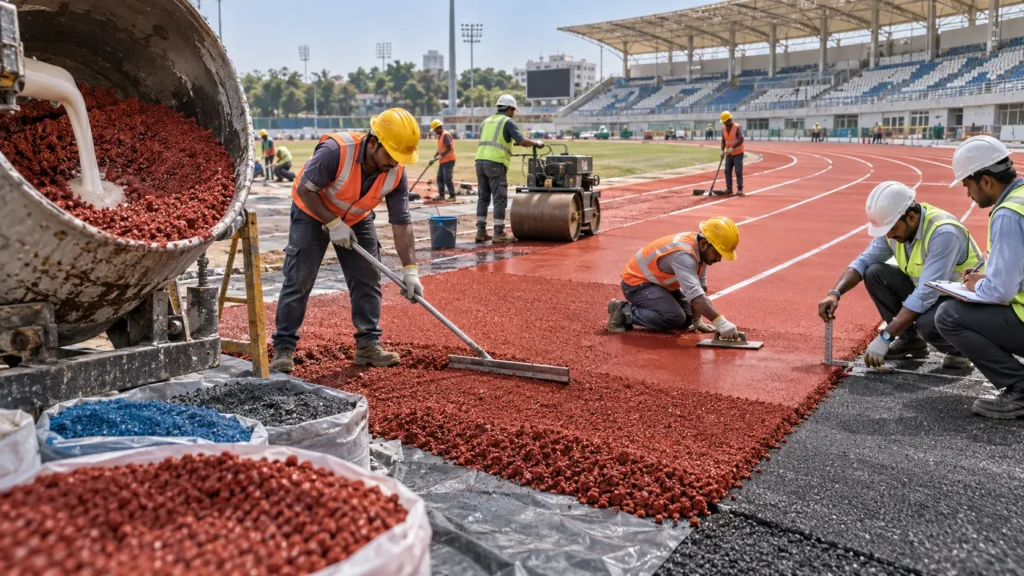
Now comes the part that gives the track its distinctive rubber surface. EPDM granules are mixed with the appropriate polyurethane binder and then spread across the prepared area. Installers carefully control the thickness and distribution to maintain consistency. Uneven application can change the feel of the track, so accurate spreading is essential for achieving reliable cushioning, traction, and performance across the running lanes.
4) Compact And Level The Surface
Once the mixture has been laid, it needs to be compacted and levelled carefully. This helps create a uniform surface while encouraging the granules to bond properly. Installers check for dips, raised sections, or inconsistent areas and correct them before the material sets. It is one of those stages where patience pays off, because small imperfections can become much more noticeable once the track is in regular use.
5) Allow Curing And Conduct Final Checks
The finished surface needs sufficient curing time before athletes can start running on it. The required period depends on the binder system and environmental conditions, so manufacturer recommendations should be followed closely. After curing, the track is inspected for surface defects, loose granules, and uneven sections. Final markings and finishing work can then be completed, leaving the track ready for safe and consistent use.
Wrapping It Up!
Installing EPDM granules is a little like building an athlete’s performance from the ground up: every stage matters! A clean foundation, proper preparation, even application, careful levelling, and adequate curing all contribute to the final result. When the installation is handled correctly, the finished running track can provide the resilience, grip, and comfort needed to support countless strides over time.
Get professional sports infrastructure with Topfloor Sports Infra!