
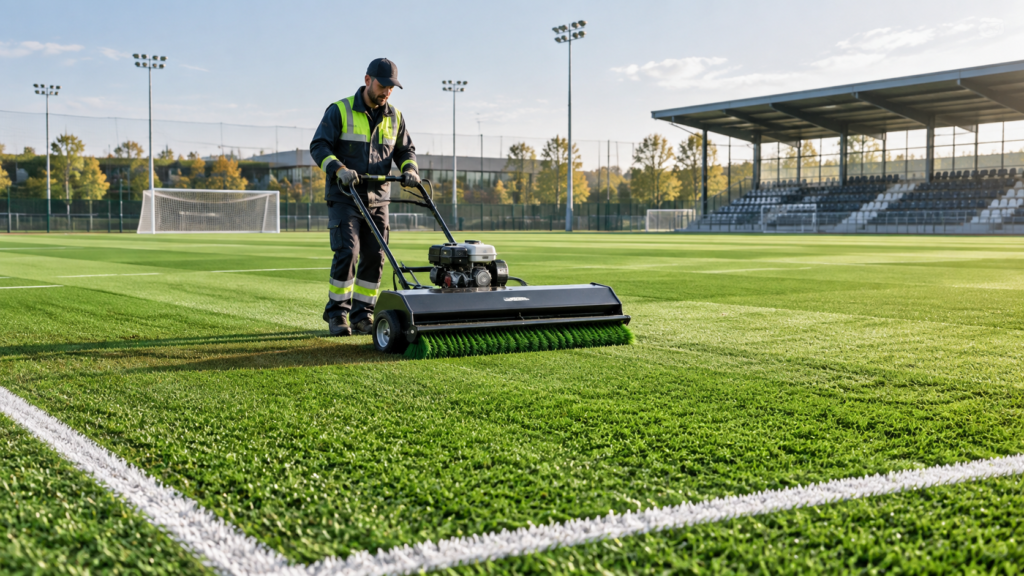
A football turf goes through a lot every day. Players sprint, tackle, turn sharply, slide, and celebrate goals on it, so the surface rarely gets a quiet moment. It may look strong enough to handle all that action, but even the toughest turf needs a little love. Regular maintenance keeps it safe, comfortable, and ready for the next big game. The trick is not to wait until the turf starts looking tired or damaged. Small issues are much easier to fix when they are spotted early. With a simple and consistent care routine, your football turf can stay in great shape for years instead of turning into an expensive problem.
Here’s How To Maintain A Football Turf Ground For Long-Term Performance?
1) Keep The Surface Clean
Leaves, dirt, litter, and other debris can accumulate on the turf, affecting its appearance and performance. Regular brushing and cleaning help keep the fibres upright and prevent unwanted material from settling into the surface. Spills should also be dealt with promptly. Avoid using harsh chemicals unless they are specifically suitable for the turf system. A simple, consistent cleaning routine can go a long way toward keeping the ground fresh and playable.
2) Brush The Turf Regularly
Constant foot traffic can flatten synthetic turf fibres and move infill away from heavily used areas. Regular brushing helps lift the fibres, redistribute infill, and maintain a more even playing surface. High-traffic zones, particularly around goal areas and frequently used entrances, may need extra attention. Brushing should be performed with equipment recommended for the specific turf. Overly aggressive maintenance can damage fibres, so the right technique matters as much as frequency.
3) Check Drainage Frequently
Good drainage keeps rainwater from turning a football match into an unwanted swimming session. Water should flow away from the surface efficiently rather than remaining in puddles. Inspect drains, channels, and surrounding areas regularly, and remove any leaves or debris that could cause blockages. If water starts pooling repeatedly, investigate the cause instead of simply waiting for it to disappear. Poor drainage can affect turf performance and may eventually contribute to more serious surface problems.
4) Manage Heavy Traffic
Not every part of a football ground experiences the same amount of wear. Goal mouths, penalty areas, centre spots, and popular entry points can receive significantly more traffic than other sections. Monitoring these areas allows maintenance teams to identify wear before it becomes obvious. Rotating training activities, where practical, can also distribute usage. Setting sensible rules around footwear, vehicles, food, and unsuitable equipment helps reduce unnecessary damage and keeps the playing surface in better condition.
5) Schedule Professional Inspections
Routine maintenance handles everyday care, but professional inspections can uncover issues that are easy to miss. Specialists can assess surface condition, infill levels, seams, drainage, and other important components of the turf system. Any damaged areas should be repaired promptly rather than left to deteriorate. Keeping maintenance records can also help track recurring problems and plan future work. Regular professional attention ultimately helps extend the turf’s useful life and maintain consistent playing conditions.
In Conclusion
A football turf does not stay match-ready simply because it was installed well. Clean surfaces, regular brushing, effective drainage, controlled usage, and professional inspections all play a part in keeping it performing at its best. The smartest way to keep it in shape is through consistent care rather than occasional major repairs. When maintenance becomes part of the ground’s routine, the turf can remain safer, more attractive, and ready for countless passes, tackles, and goals.
Bring quality sports surfaces to your project with Topfloor Sports Infra!