
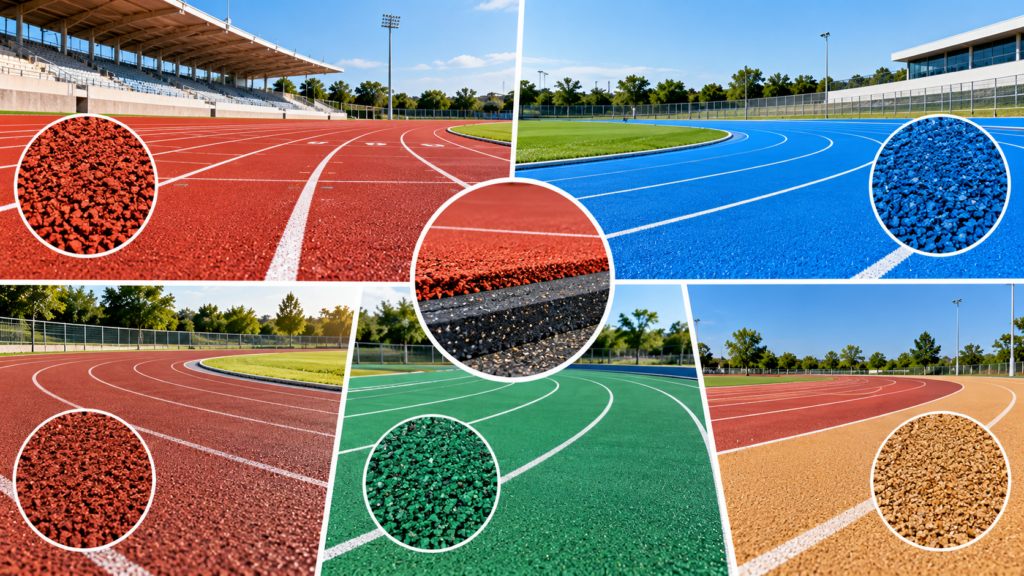
Every great race begins with a single step, but the surface beneath an athlete’s feet can make a real difference! From school playgrounds to professional stadiums, running tracks are designed to support speed, comfort, and stability. The right running track flooring system can support athletes train confidently, reduce surface-related injury risks, and perform at their best. Let’s explore the different track surfaces and know what makes each one suitable for athletics!
Synthetic Running Tracks For Speed & Comfort
Synthetic tracks are popular in professional stadiums because they offer a consistent, resilient surface. Commonly made from polyurethane or rubber-based materials, they provide good grip, shock absorption, and energy return. These features support sprinting, jumping, and regular training. A well-designed athletic running track flooring solution can also withstand frequent use and changing weather conditions, making synthetic surfaces a practical option for schools, sports academies, and competitive athletics facilities.
Rubber Running Tracks For Better Cushioning
Rubber tracks are valued for their flexibility and comfortable feel underfoot. They can help absorb some of the impact generated during running, making them suitable for regular training sessions. Depending on the design, rubber surfaces may use recycled rubber granules, polyurethane binders, or specialised synthetic layers. However, cushioning and traction vary between products. Opting for a suitable running flooring system requires considering athlete needs, expected usage, drainage, and maintenance requirements.
Cinder Tracks For Traditional Athletics
Before synthetic surfaces became widespread, cinder tracks were commonly found at schools and athletic grounds. These tracks use crushed cinders or similar granular materials to create a relatively soft running surface. They can be less expensive to construct initially, but they require regular levelling, watering, and maintenance to remain usable. When compared to modern synthetic tracks, cinder surfaces generally offer less consistent footing and performance, especially when weather conditions change.
Grass Tracks For Natural Training
Grass tracks provide a natural surface that can be useful for conditioning, endurance workouts, and cross-country training. The softer ground may reduce impact compared with some harder surfaces, although cushioning varies with soil conditions and grass quality. These tracks are generally less suitable for precise sprint training because uneven ground, wet patches, and changing traction can affect performance. Regular mowing, soil care, and proper drainage help keep grass running areas safe and usable.
Choosing The Right Surface For Athletic Performance
The ideal track surface depends on the athletes, available budget, climate, and intended use. Professional competitions often require certified synthetic surfaces, while schools may prioritise durability and maintenance costs. Before installing athletic running track flooring, consider shock absorption, grip, weather resistance, drainage, and applicable athletics standards. Working with experienced installers also helps ensure the base, surface layers, and markings meet the facility’s requirements and provide reliable performance over time.
In Conclusion
A running track is more than a place to race; it is an important part of an athlete’s training environment. From resilient synthetic surfaces to traditional cinder and natural grass, every option offers different benefits and limitations. Investing in the right running track flooring system means balancing performance, safety, durability, and maintenance. Topfloor Sports Infra Pvt Ltd provides sports flooring solutions, including synthetic running track systems, designed for schools, sports facilities, and athletic environments. Quality materials and professional installation help create dependable surfaces that support athletes as they train and pursue their goals with confidence.