
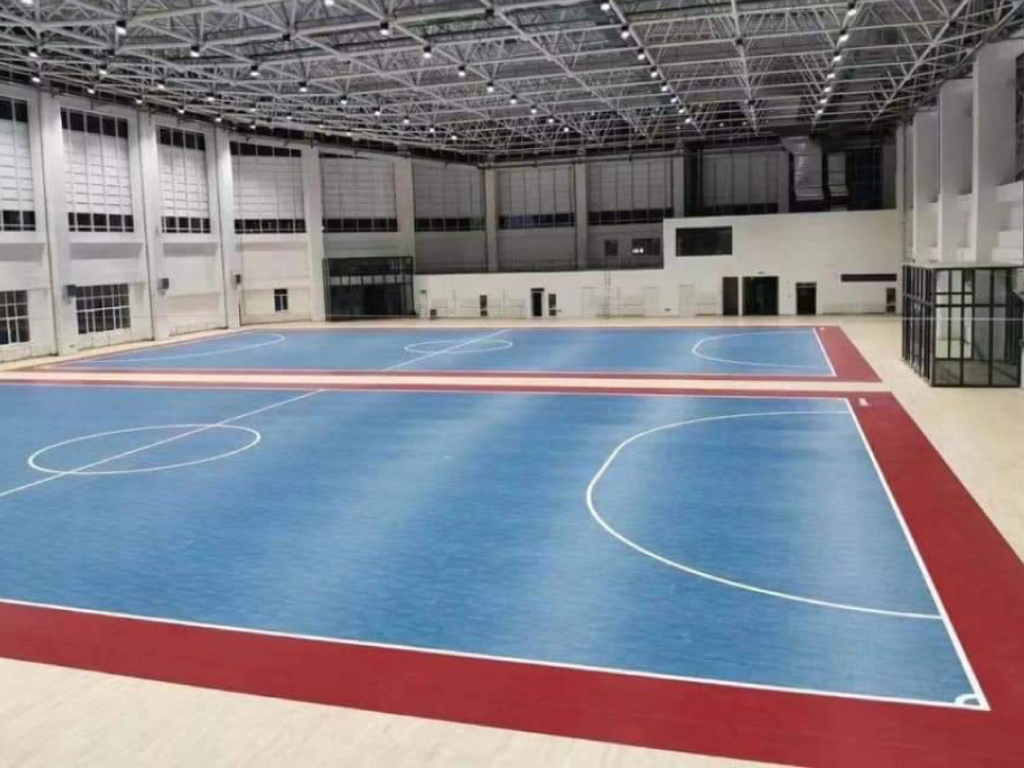
Having the appropriate flooring in a sports facility is not all about looks. It impacts the performance of athletes, safety in the facility, and the longevity of the surface. Every sport has different demands, and luckily, there’s a variety of flooring that can meet those demands.
Types Of Sports Flooring
Hardwood Floors
Hardwood floors, especially those of oak or maple wood, have long been a favorite. They can be seen used in basketball courts, volleyball gyms, and other such facilities. They have great bounce and grip and thus make ideal floors for fast-paced games. They also possess that classy, shiny appearance that we all adore.
Vinyl Flooring
Vinyl is a general-purpose good thing. It’s got a bit of cushion to it, so it’s great for dance studios, aerobics classes, and multipurpose facilities. It’s low maintenance and can be ordered in customized colours and patterns. Badminton or yoga class, vinyl does it all pretty well.
Rubber Flooring
Enter a gym and you’ll find yourself standing on rubber flooring. It’s shock-absorbing, slip-resistant, and pressure-resistant. Perfect for areas used to do weightlifting, it resists heavy equipment and offers safety to high-intensity training.
Also Read: Comparing PU, EPDM, and Acrylic Surfaces: What is Best for Sports?
Synthetic Flooring
Polyurethane artificial flooring is frequently used on sport courts like those found in tennis, basketball, and badminton. It is famous for being durable and shock-absorbing with a wood-like feel but with more possibilities to personalize. It is even possible to personalize the texture of the surface to your sport.
Artificial Turf
For football and cricket played outdoors, artificial turf is a good option. It’s nearly as good as real grass but with much lower maintenance. It doesn’t need watering and mowing and can handle different weather conditions. It’s also cheap to maintain in large fields.
Acrylic Sports Floors
Acrylic sports flooring works well for outdoor courts, walkways, and even commercial facilities. It’s durable, textured, and can withstand heavy traffic and fluctuating humidity conditions. It’s also low-maintenance and easy to clean, making it a hassle-free option for high-traffic areas.
Final Thoughts
Choosing the right flooring depends on the sport being played, foot traffic you can anticipate, and maintenance you’re willing to perform. If you’re unsure, talking to professionals in sports flooring can really help you make the right decision for your facility and your budget.